
why somatic therapy for highly sensitive people (HSPs)
Finding out about the concept of highly sensitive people (HSP) turned my world around when I first came across it almost two decades ago. I found language and a framework that helped me begin to appreciate qualities within myself that growing up in a mind over matter bustling city-state like Singapore, had always seemed like a problem: being easily moved to tears both sad and glad, being able to understand what was being felt by someone else even when unsaid, reflecting deeply about everything, etc.
What I offer you comes from the lived experience of being a highly sensitive person too, where navigating this loud, busy world has been greatly helped by a deeper understanding of high sensitivity and supportive body-based practices.
If you’re wondering if you might be a HSP, you can take this self-test here, and if you see yourself in what I’ve described on this page, I invite you to reach out for an exploration call or a session together in Singapore or online so you can listen to rather than override your body’s signals and begin to embrace your sensitivity.
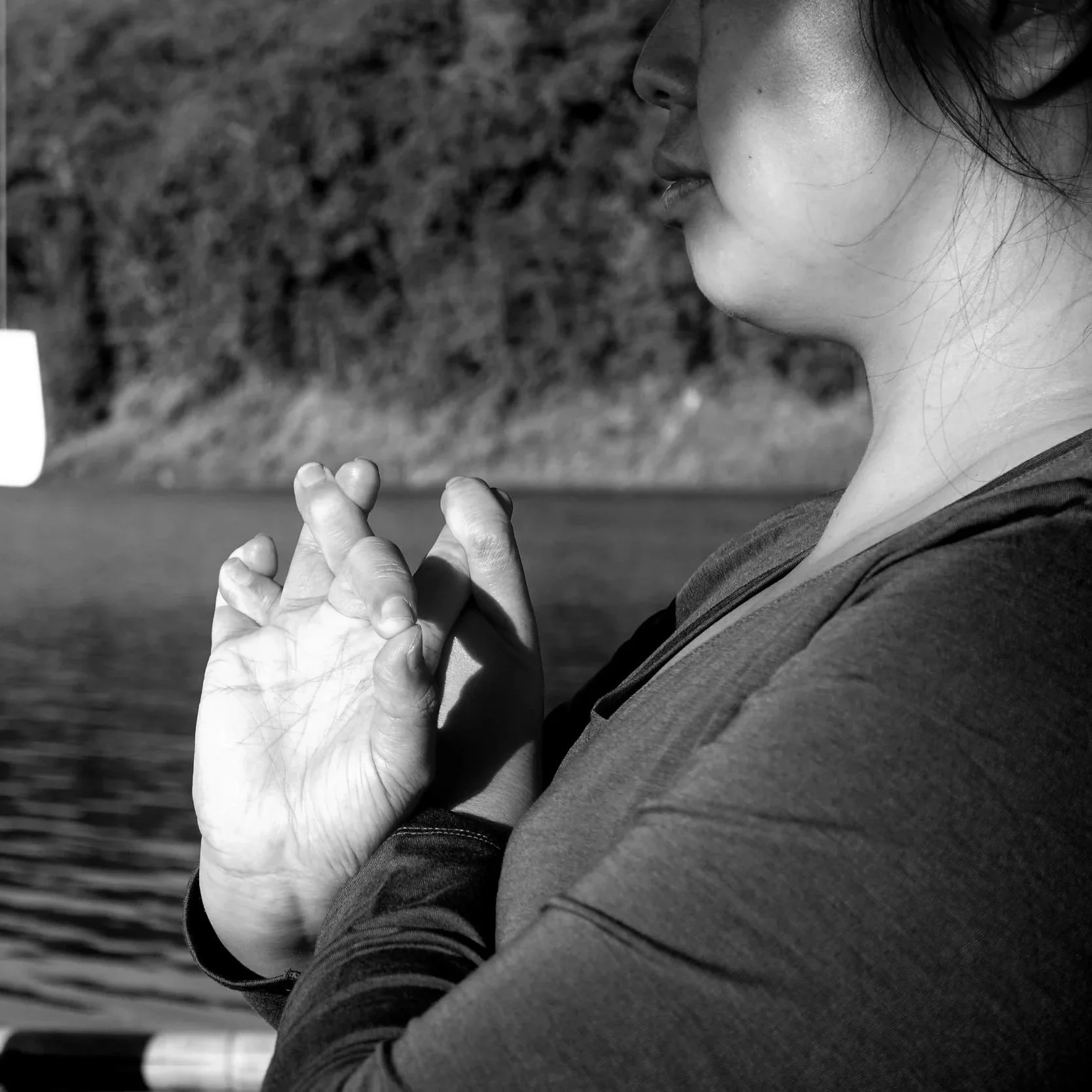
What does it mean to be highly sensitive?
Psychologist Dr Elaine Aron popularised the term “highly sensitive person” (HSP) almost three decades ago, and her research based on the US population found that almost 20% of the population are born with nervous systems that are built differently. Nervous systems that process the world with a greater depth and intensity, and hence have a greater responsiveness to stimuli both positive and negative. So to be highly sensitive can be considered a form of neurodivergence and is not a diagnosis or a disorder.
According to Dr Aron’s DOES framework, four traits tend to be found in HSPs:
Depth of processing. Thinking deeply about everything, finding unusual connections between topics, weighing out consequences with a lot of thought.
Overstimulated easily. Experiencing more stress in situations of noise, chaos and pressure, needing more downtime between engagements.
Emotional responsiveness*. Strong responses to feedback, depth and intensity of feelings even for strangers, empathetic towards others.
Sensitive to subtle stimuli. Noticing small details sensation-wise and relationally whether positive or negative, influenced more heavily by external environment, often having a strong sense of “knowing” about people.
*I’ve taken the liberty to adapt Dr Aron’s original phrasing of this trait that feels for me like it has value judgment

Why somatic therapy can be especially supportive for HSPs
Given that what HSPs tend to experience is deep thinking and feeling, alongside overstimulation, somatic therapy can be especially supportive because of its focus on rebuilding the relationship with your body and emotions. The experience of being overwhelmed or overstimulated is not primarily a thinking problem, but one that lives in the body and needs to be met there.
Moving beyond the stuckness of cognitive clarity. Many HSPs already have a lot of self-awareness and understand their triggers and patterns yet find that they arrive at a plateau with traditional talk therapy. Somatic therapy which supports the uncovering of underlying drivers of behaviour held at the level of the body can help.
Validation of felt experience. HSPs have at some point in their lives (or still continue to) feel a lot sensorially or emotionally, but this might have often been minimised or dismissed. Somatic therapy that focuses on allowing and acknowledging felt experience offers a reparative experience.
Growing capacity for sensation. HSPs often experience strong emotion and sensation that can feel overwhelming and lead to shut down. Somatic therapy that focuses on developing the relationship with your body and body-based tools to help anchor and discharge help to grow your capacity to allow your emotions and sensations to be experienced.
Integrating preverbal developmental trauma. HSPs can experience developmental trauma arising from the heightened misattunement from caregivers who might not be HSPs themselves, over and above other challenging childhood dynamics. HSPs can often be “parentified children”, feeling overly responsible for their caregivers’ needs, even without words. Somatic therapy that works with the subconscious is especially supportive for integrating experiences that occurred in childhood that might not have an accompanying verbal narrative.
What sessions together might support you with
It is my hope that over time, as a HSP, you feel more ease in inhabiting your depth and sensitivity as a source of strength, rather than something you need to suppress or reject. That the keen sensing you already innately have serves as a powerful inner compass to guide your decision-making, and the nuance you bring to conversations, observations or spaces enhances whatever field you offer your gifts to.
Our time together might support you in:
Growing your experience of felt safety in your body
Developing more compassion for who you are and how you experience the world
Setting boundaries with more ease and less guilt
Feeling more empowered with tools to navigate emotional and relational challenges
Reconnecting with the gifts of your sensitivity - your creativity, intuition and your capacity for deep connection to people and all of life.
If you’ve read this far and feel a resonance with your own experience or a curiosity to find out more, I invite you to reach out for an exploration call or a session together.